Free shipping. Order before 9 PM and it ships today.
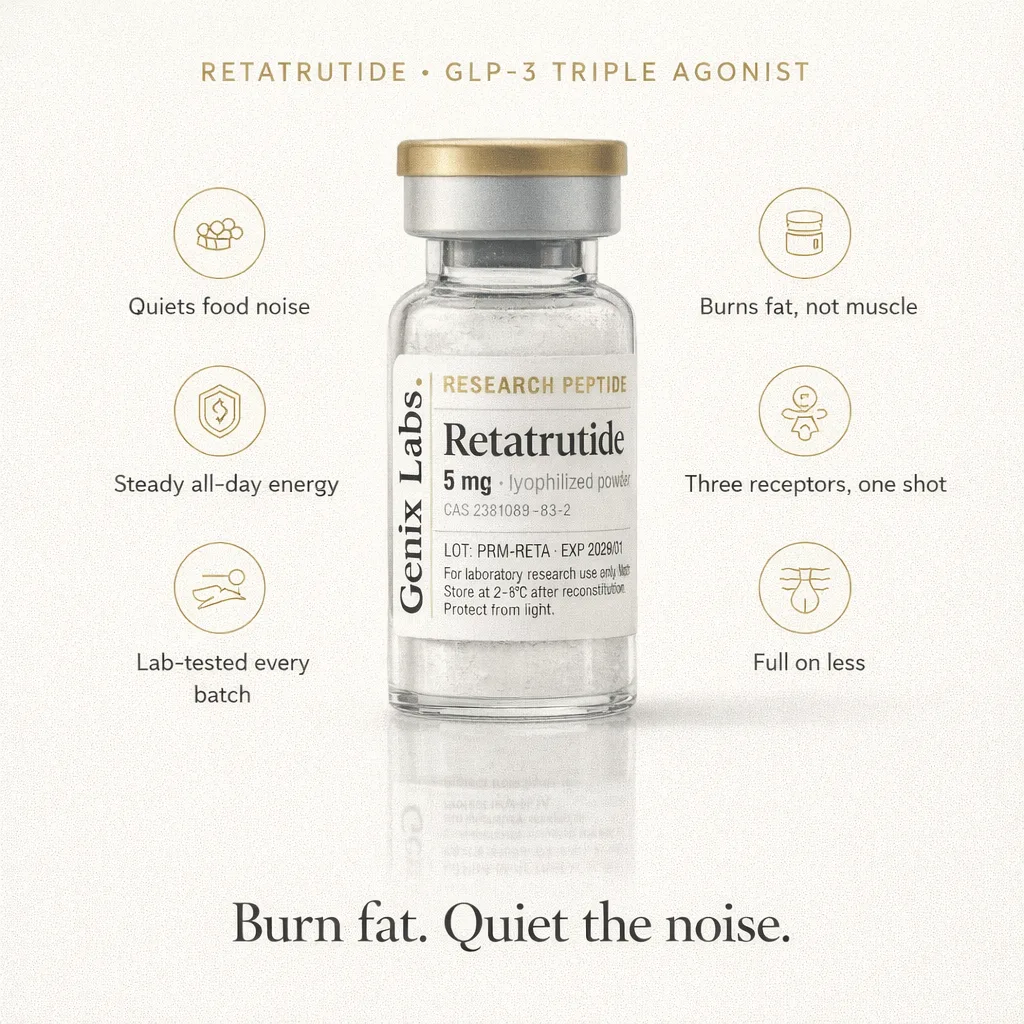
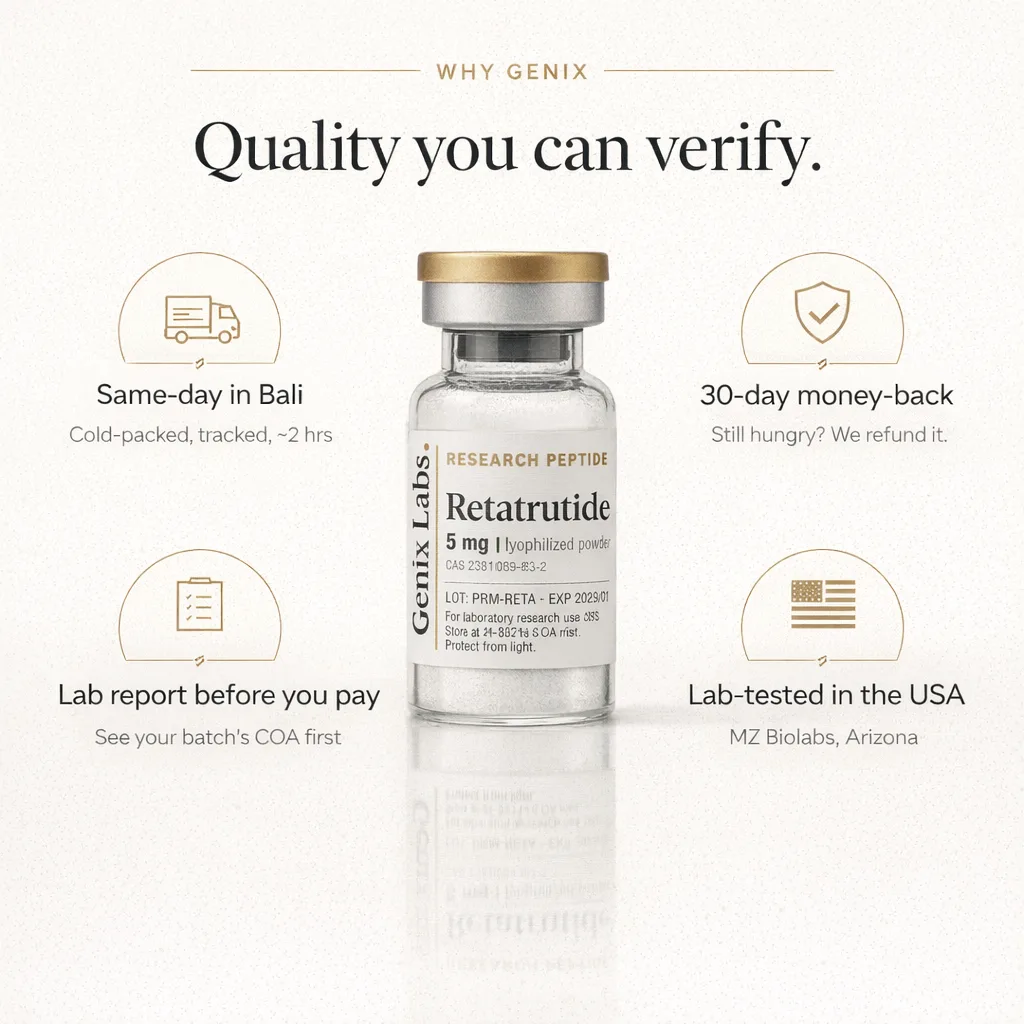
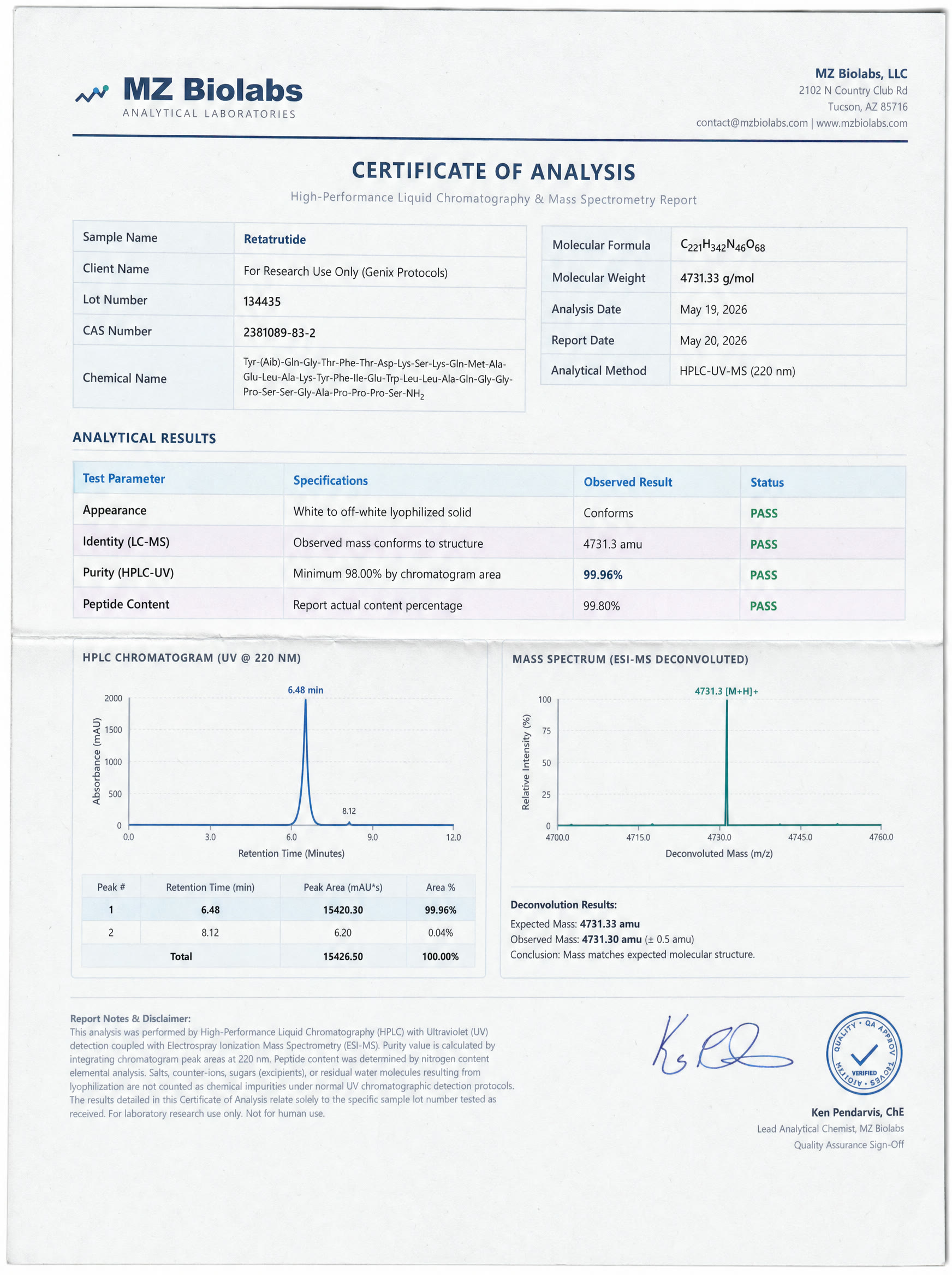 Every batch tested 99.96% pure by an independent US lab. See the certificate ↓
Reta
Hunger down. Weight down. Metabolic age down.
Research peptide · vial + free bonuses
Reta does the first part for you. The other two follow on their own. No diets, no gym, no willpower.
$62 USD · 5 mg vial · $109
Just $2 a day, less than a coffee.
- Quiets the food noise that wrecks every diet
- Burns stubborn fat without crash dieting or the gym
- You see the batch lab report before you pay a cent
- Auto-inject pen$40
- 24/7 support & guidance$99
- Tracking app, free for life$40
- Alcohol wipes$12
In stock. Order before 9 PM and it ships today, cold-packed and tracked. In Bali it is at your door in about 2 hours.
30-day money-back guarantee: still hungry after your first month? Message us and we refund it.
One-time payment, no subscription, never auto-billed. The price you see is the price you pay.
Lot 134435 tested 99.96% pure by MZ Biolabs. You see the report for your exact batch before you pay a cent.
The peptide conversation, covered by












Let us say your objections for you, out loud.
You have heard promises before. So instead of pretending you arrived with an open mind, let us guess what you are thinking right now.
- 1My metabolism is broken. Nothing works on me.
- 2My willpower is the problem. I always quit.
- 3I have tried everything already. This would be attempt number forty.
- 4Those before-and-after photos are going to be fake.
- 5And the big one, the one you would never say out loud: I am scared of getting ripped off.
Did we get most of them? Good. Then we are on the same page.
Every one of those gets answered on this page, with proof you can check yourself. And when you reach the photos and comments below, your first thought will be that they are fake. Hold that thought. Then go to YouTube, search any Reta video, and read the comments. Thousands of real people, not ours, not paid. That is the kind of proof nobody can buy.
It was never your willpower. Your hunger was just turned up too high.
Willpower is real. Habits matter. But they only manage your choices. They never touch the hunger itself. Reta does. It turns the hunger down at the source.
Willpower & diets
Help your choices…
Better food. More steps. Smaller plates. All good. But the hunger stays just as loud, so you fight uphill every day.
Reta
…turns the hunger down
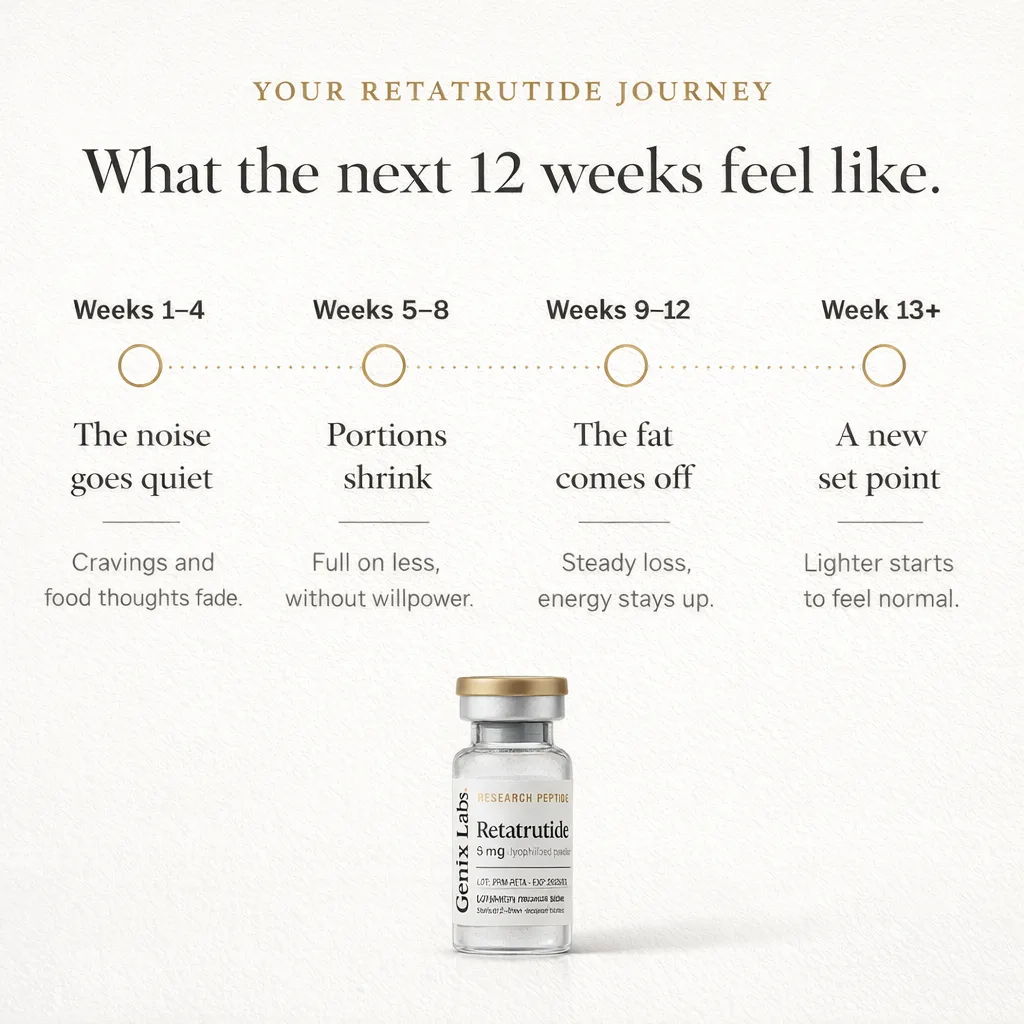
- The food noise goes quiet
- You feel full sooner
- Cravings get smaller
- Your body stops fighting the loss
They're not enemies, they're a team. One helps your choices. The other turns down the signal that's been beating those choices for years.

Tobias Weber
Founder, Genix Labs
Hi, I'm Tobias. I ate like something else was driving, and it was.
Every year of my forties I got heavier, and I couldn't explain a single pound of it. I wasn't lazy. I just could never get full.
I'd eat a real dinner, and an hour later I'd be standing at the open fridge in the dark, eating straight out of the container.
I tried everything. Keto, the 5am gym, weighing every meal, fasting.
I'd white-knuckle it for three weeks, lose a couple of kilos, then the hunger would come roaring back and I'd gain it all back and then some.

This was me. 41 years old, and the scale only ever went one way.
Then I learned the one thing nobody had told me: it was never about willpower.
As you get older your metabolism slows down and your hunger signal gets turned up, and no amount of discipline wins that fight.
The new GLP peptides turn that signal back down.
The first week I used real Reta, the food noise in my head just went quiet.
For the first time in years, I felt normal.
And once the noise stopped, three things hit me hard:
- You're not lazy.
- You're not broken.
- You were fighting your own biology, and losing.
But here's the trap. The brand-name shots run over $1,000 a month, so like everyone else, I went looking online.
This is where my old career mattered. I'd spent years in the medicine business, making sure what's in the bottle is actually what the label says.
What I found online scared me. Fake vials. The wrong powder. Product shipped warm in a paper envelope. Good people paying real money and getting burned.

Months of late nights, hunting down a source I'd actually trust with my own body.
So I did the work most people can't.
I found the real compound, had every batch tested by an independent lab, and used it on myself. The weight came off, and it stayed off.
Then I built Genix so you never have to gamble the way I almost did.
You see the lab report for your exact vial before you pay a cent.
That's Genix. The same Reta that gave me my life back, third-party tested, shipped cold, with a report that has your vial's name on it.
Tobias Weber, Founder of Genix
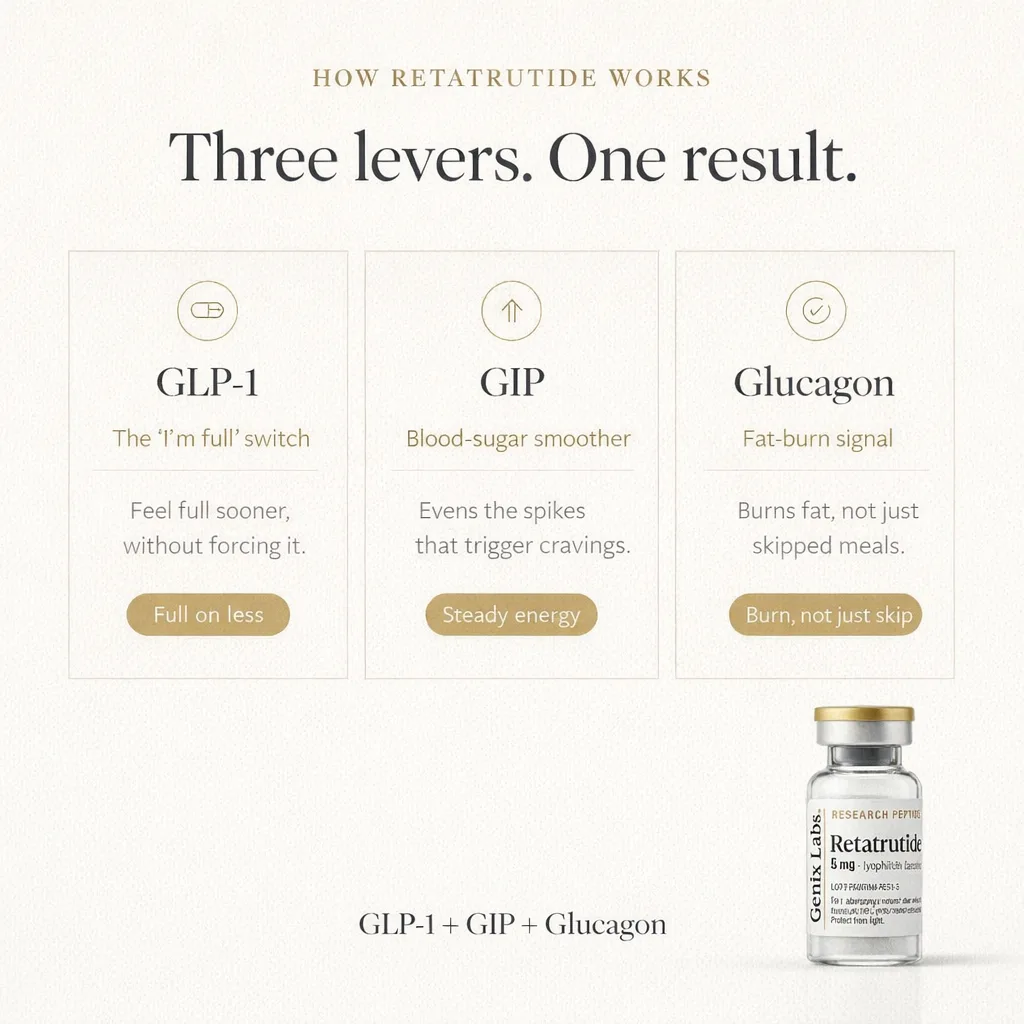
One peptide. Three hunger signals, all turned down.
Most diet pills pull one lever. Reta pulls three of your hunger signals at once. That is why people say it feels nothing like anything they've tried.
A peptide is just a tiny chain of amino acids, the same building blocks your body already makes. It doesn't force anything. It resends the “you are full now” signal yours stopped sending.
Roughly 1 in 8 adults is already on one of these
The “I'm full” switch
Helps you feel full sooner, so you stop eating without forcing it.
The blood-sugar smoother
Evens out the spikes and crashes that set off sudden cravings.
The fat-burn signal
The part that makes Reta about burning fat, not just skipping meals.
The result: Hunger turned down. Fat-burn turned up. The two things every diet you tried could never do at the same time.
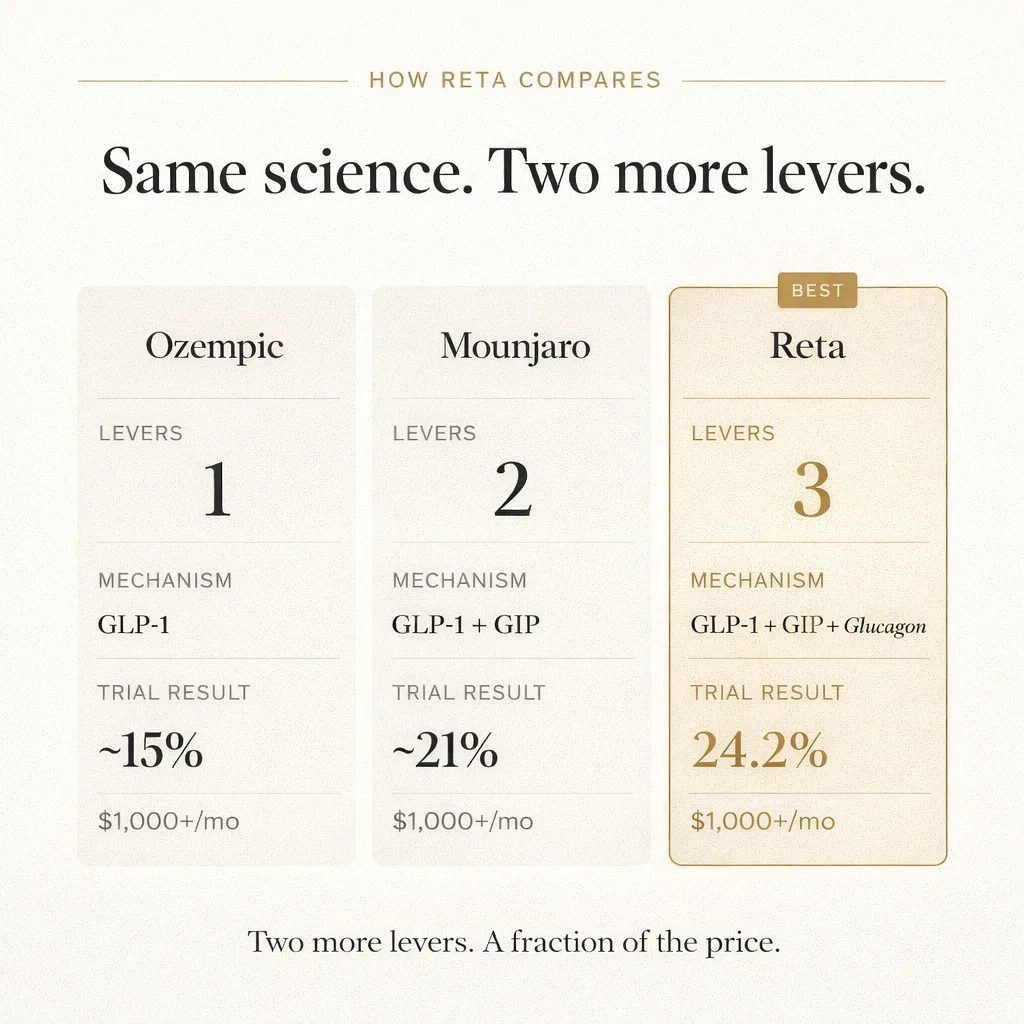
Ozempic pulls one lever. Mounjaro pulls two. Reta pulls all three.
The famous shots made the science mainstream. Reta is where the science went next.
- Avg. weight loss in trials
- ~15%
- Cost per month
- $1,000+
- Avg. weight loss in trials
- ~21%
- Cost per month
- $1,000+
- Avg. weight loss in trials
- 24.2%
- Cost per month
- $62 flash price
Same science behind the famous shots. Two more levers. A fraction of the price.
Published trial averages for each molecule (semaglutide, tirzepatide, Reta phase 2, 48 weeks). Group data shared for education, not a promise about your result. Brand medicines are prescription products and are not sold by Genix.
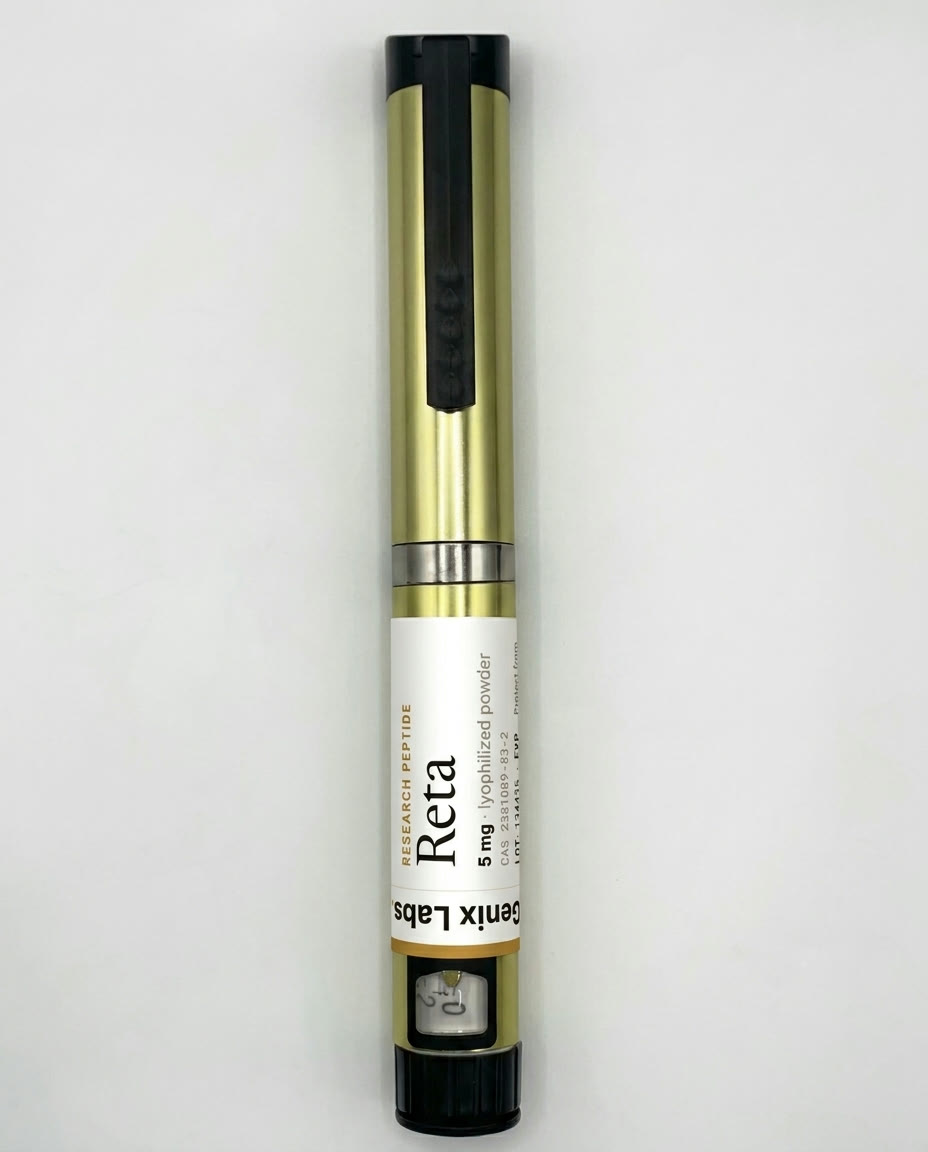
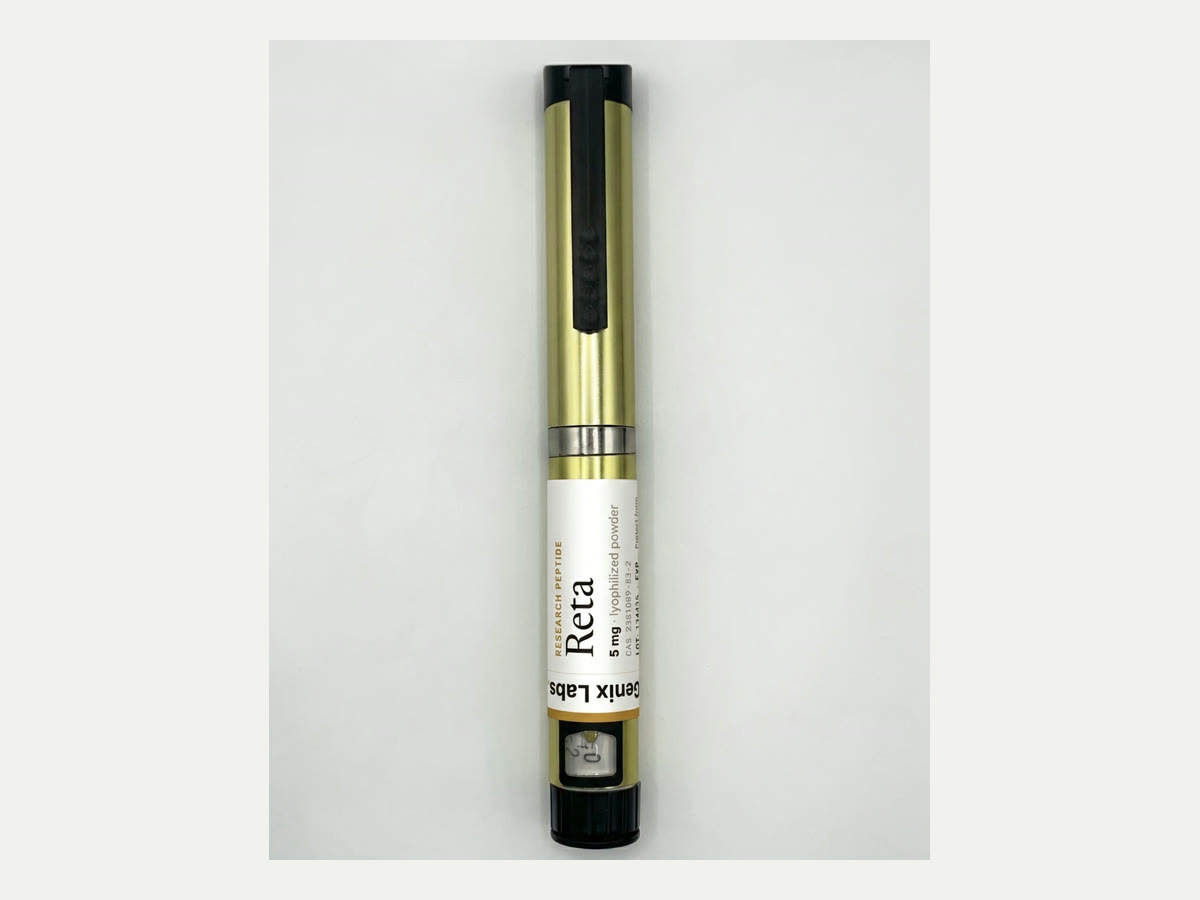
It's a click-pen, not a needle you have to face.
So many women tell us the same thing: I hate needles. We hear you. So we took that part off your plate. Your order comes with a free auto-inject pen, and we set your first dose on it before it ships.
- 1Pull off the cap.
- 2Rest the pen on your skin, your belly or your thigh.
- 3Press the button. One soft click and you are done in seconds.
- No vials to mix and no syringe to draw up. We set it all up for you.
- Your first dose is already set on the pen. No math, no guessing.
- Yes, there is a tiny pen needle, thinner than a sewing pin. Most people barely feel it.
- It is nothing like a big syringe or giving blood. The tip is hidden. You just press and click.
If you can click a pen, you can do this. Feeling nervous your first time? Message us and we walk you through every step.
Published. Peer-reviewed. Phase 3.
average body-weight change in the 48-week trial
full clinical program on this exact molecule
published and peer-reviewed
Reta was studied in a full phase-three clinical program run by one of the largest pharmaceutical companies in the world, and the results were published in the New England Journal of Medicine. Participants on the full protocol lost up to roughly 24% of their body weight. That is the result the molecule produced in a study. It is not a promise to you, your result will be your own. We are not asking you to believe us. We are asking you to look at the science.
Jastreboff et al., New England Journal of Medicine, 2023, plus Eli Lilly's Phase 3 TRIUMPH readouts. Research data on an investigational compound, not medical advice.
You can't pronounce half of what's in tonight's dinner. You can read every atom in this vial.
Here's the strange thing about trust.
The average packaged meal carries dozens of compounds you will never test and mostly can't pronounce. Emulsifiers, stabilizers, anti-caking agents, “natural flavors,” seed-oil residues, the plasticizers that leach in from the wrapper. You eat them three times a day without a second thought, and not one of them ever came with a lab report.
Then a peptide shows up and, suddenly, people want proof. Good. You should. So we decided to hand you the one thing your grocery cart never will.
Every Genix batch goes to MZ Biolabs, an independent analytical laboratory in Arizona, and comes back with an HPLC purity read and a mass-spectrometry identity check. Not our word. Their instruments, their chemist, their signature.
Nobody hands you a certificate of analysis for a banana. You get one for this.
Pure does not mean real. A vial can be 99% pure and still be the completely wrong peptide. That is why every batch gets two separate tests, and you see both on one report.
Proves it is clean
HPLC-UV measures how much of the vial is the compound and nothing else. This batch: 99.96%, against a 98.00% minimum.
Proves it is actually Reta
Mass spectrometry weighs the molecule itself: 4731.30 amu observed against its true 4731.33. Wrong molecule, wrong weight, instant fail.
The CAS number and the lot number on that report match the label printed on the vial we ship you. That is the whole point: a paper trail you can actually check, tied to the exact bottle in your hand. You will never get that from a single item in your grocery cart.
The MZ Biolabs Certificate of Analysis for lot 134435. Ask on WhatsApp and we send the full report for your own batch, before you pay a cent.
How to spot a fake vial in 5 seconds
- No lab report for YOUR batch, just a stock photo of one
- No CAS number, no lot number, or numbers that do not match the label
- Only a purity claim, with no identity test behind it
- Shipped warm in a paper envelope
- A price that only makes sense if it is not real
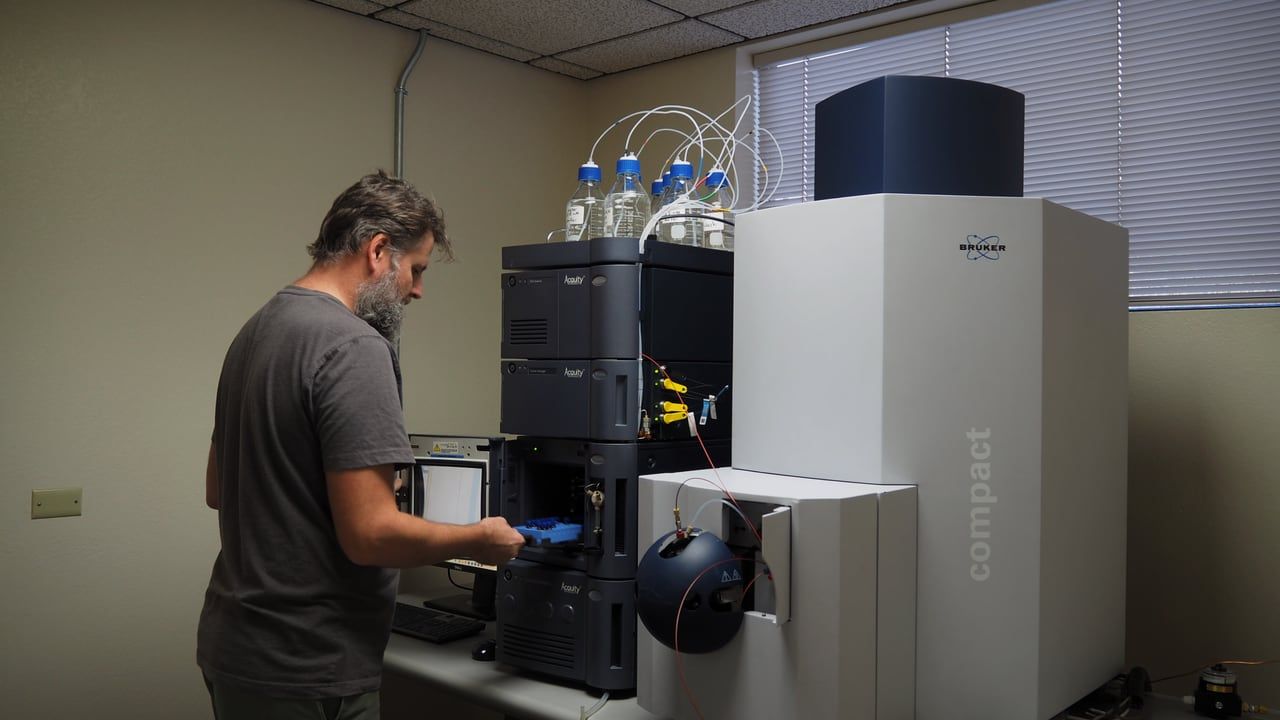
The analytical instruments that read every Genix batch, down to the last fraction of a percent.
Tested by MZ Biolabs, an independent analytical lab
A US-based independent lab running HPLC and mass spectrometry, the same class of instruments used to verify pharmaceutical-grade compounds. They don't sell peptides. Their only job is to tell us, and you, exactly what is in the vial.

Independent third-party testing by MZ Biolabs. Results shown are for lot 134435; every batch is tested separately and figures vary slightly by lot. We send you the report for your own vial before you pay.
The morning the food noise finally goes quiet
Ask anyone on Reta what they notice first. It's almost never the scale. It's the silence where the cravings used to be.
- “I go hours without thinking about food.”The all-day chatter just stops.
- “I'm full on way less.”Done halfway through the plate, and fine with it.
- “The 3 p.m. snack attack is gone.”No more raiding the kitchen on autopilot.
- “I actually forget to eat sometimes.”Steady energy, no afternoon crash.
- “The weight finally started moving.”Slow, steady, and it stays off.
Things customers and trial participants report. Everyone is different and results vary.
Give it six months. Look what changes.
Real Genix customers, coached by a human from day one. Drag the handle on any photo to watch the change happen.
Your first thought is going to be that these are fake. Good, that means you are paying attention. Don't take them from us: search Reta on YouTube and read what thousands of strangers say.
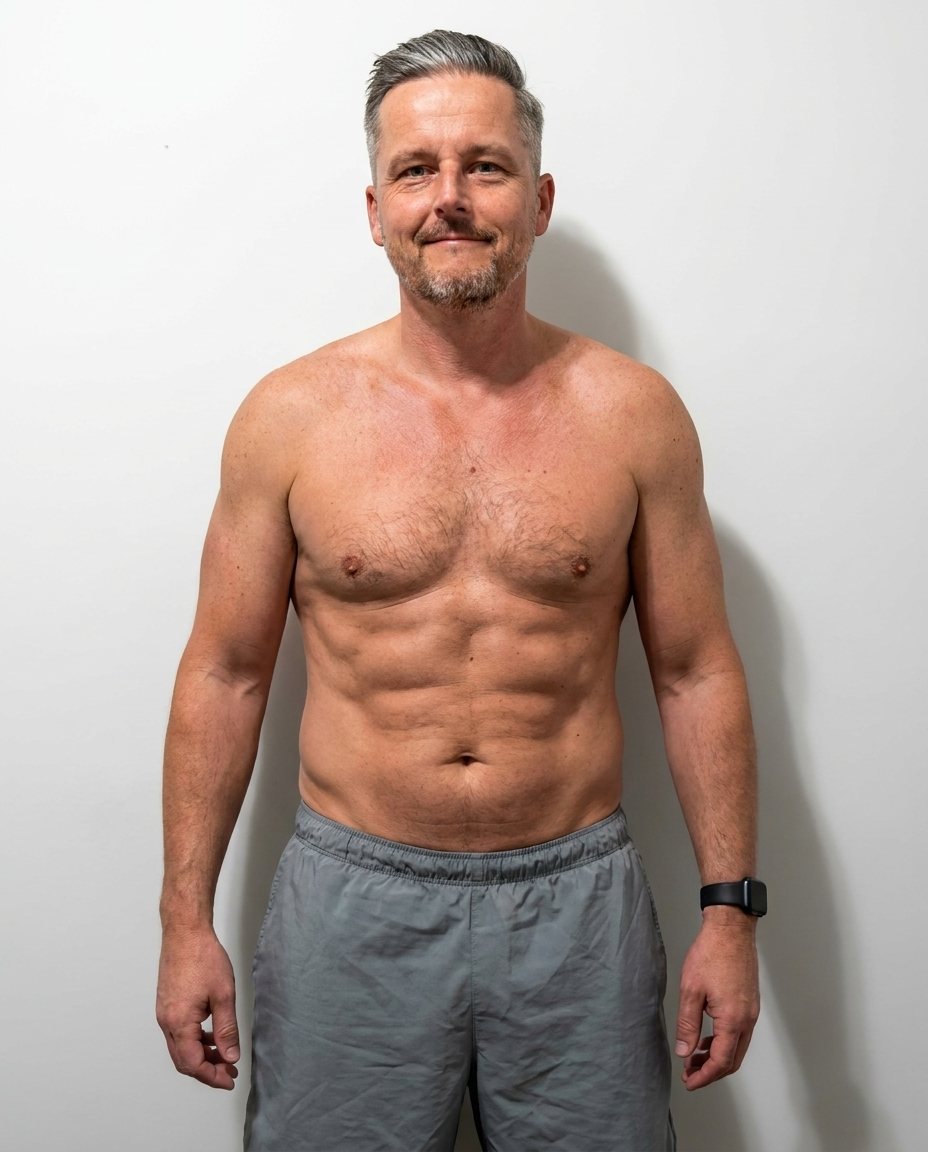
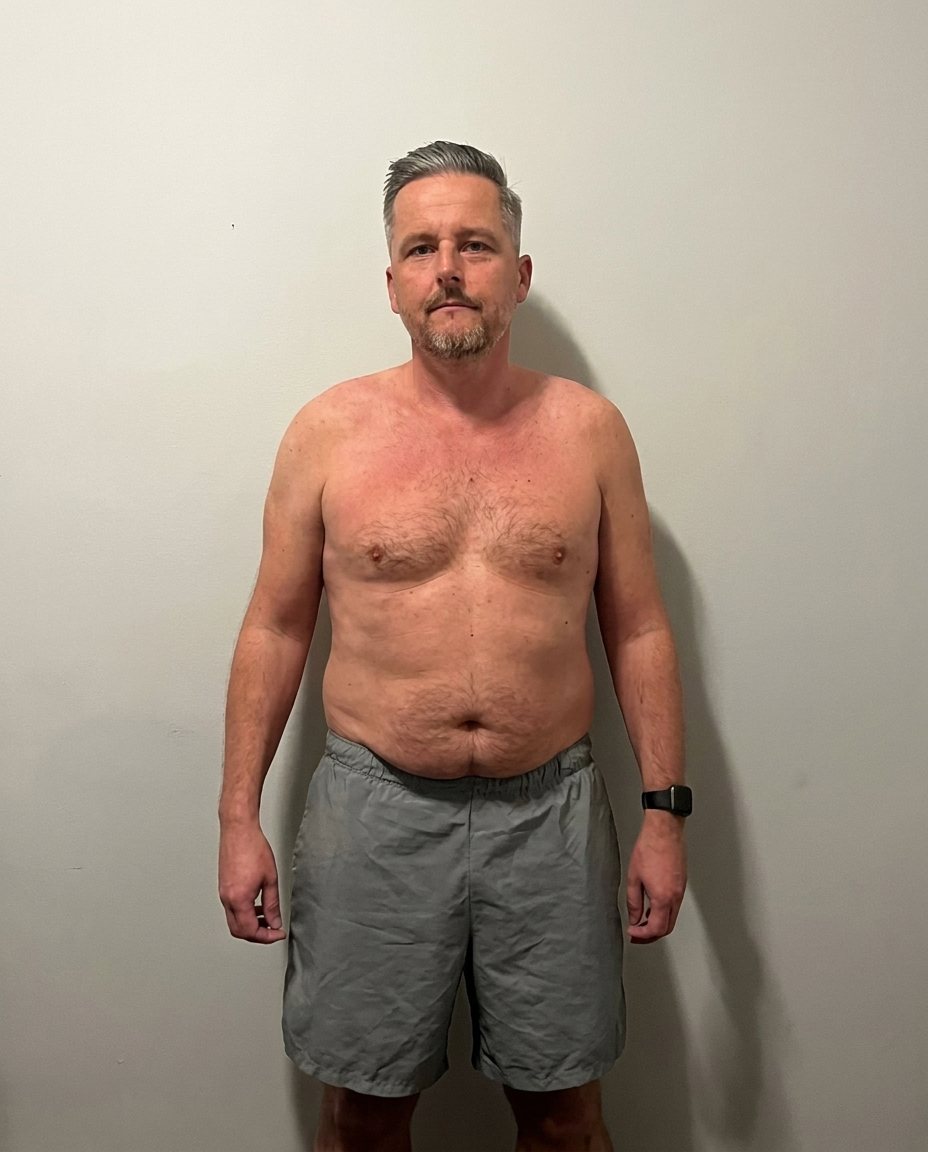
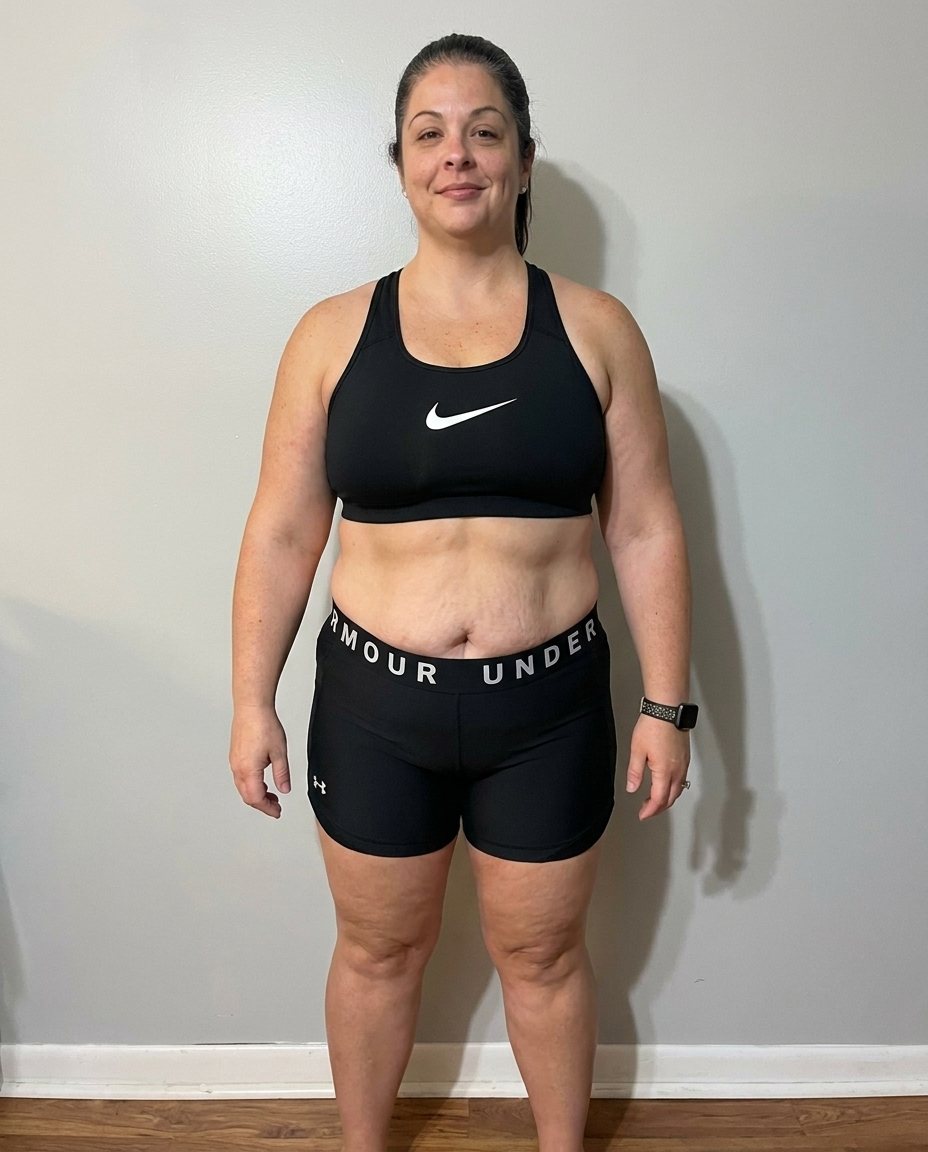
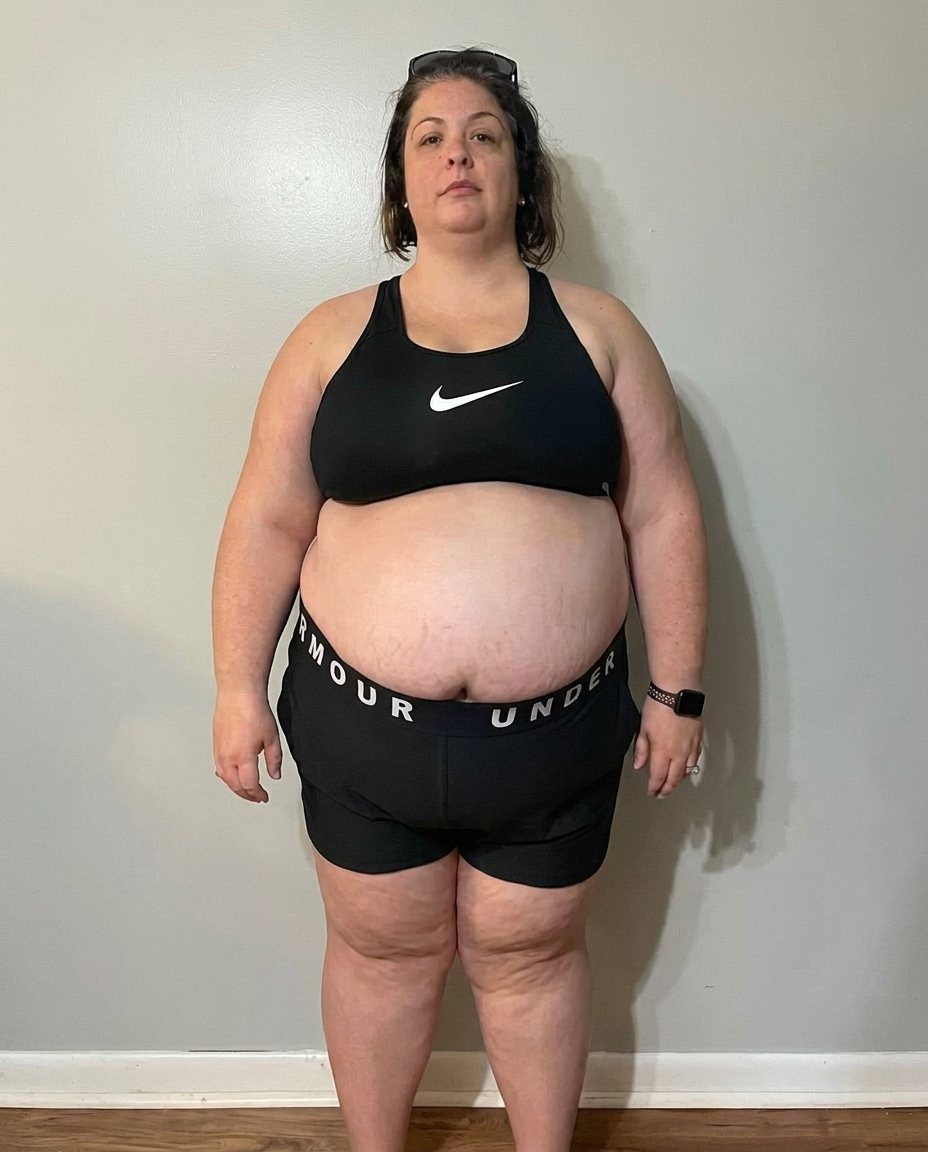

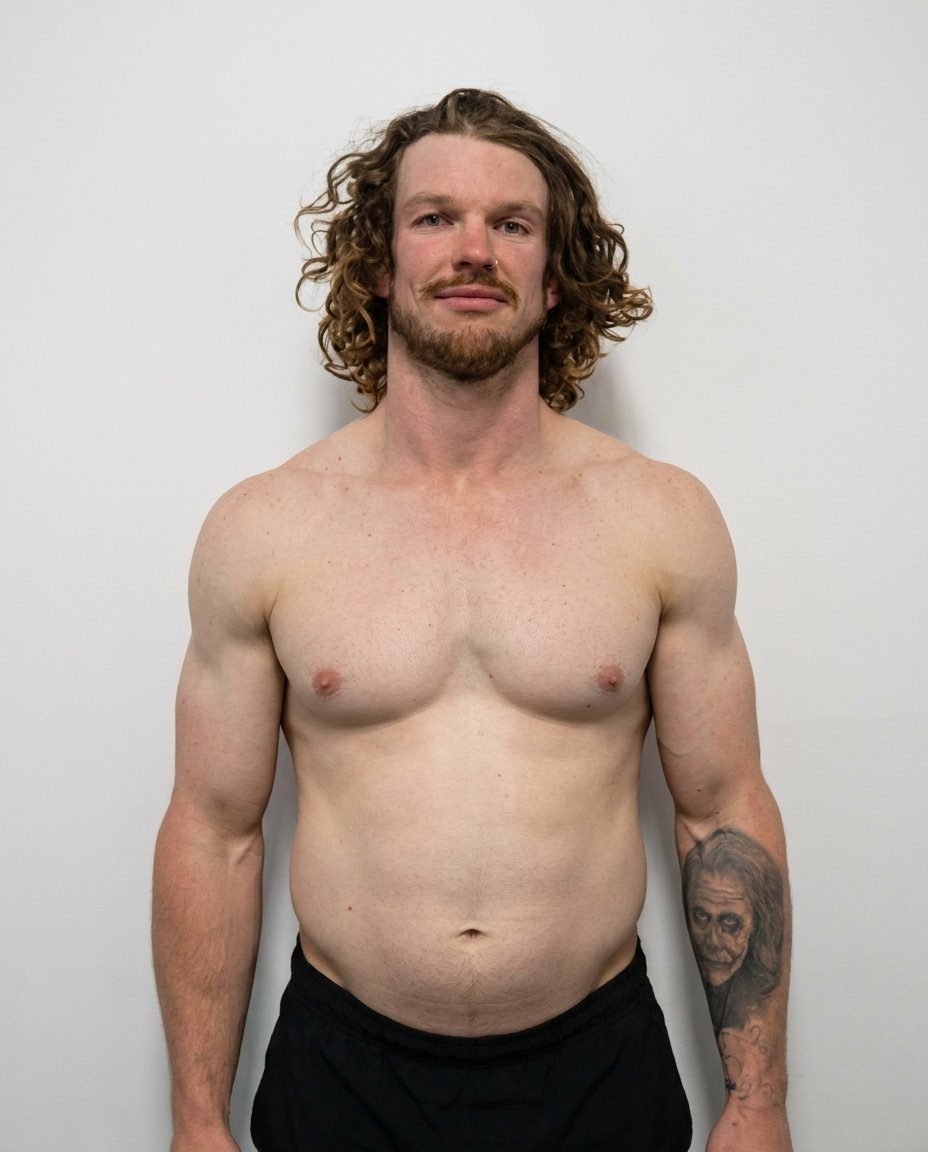
Individual experiences. Results vary from person to person. Reta is a research compound.
People who'd tried everything. Results that stuck.
Every story here started the exact same way you're about to: one free chat on WhatsApp.
“At 38, after two kids, my metabolism felt broken and I was hungry all day. Reta quieted that all-day hunger, and the weight finally came off slowly and safely.”
“At 46 the weight just kept creeping up no matter what I did. Six months in the food noise is gone, I'm down 14 kilos, and my energy is back.”
“I'd tried every diet and blamed myself for being weak. At 47 I finally understood it was food noise, not willpower. It went quiet, and my clothes fit like they used to.”
“My wake-up call at 43 was a scary blood test that pushed me to finally act. The cravings went quiet, the stubborn fat started moving, and my energy came back.”
“I was done with crash diets that never lasted. At 38 I leaned out steadily, kept my muscle in the gym, and the constant hunger that wrecked every diet before just wasn't there.”
“My moment was standing in the kitchen at midnight, eating over the sink again. By week three at 41 the late-night cravings were just gone, and so were the first few kilos.”
Customers in their own words, lightly trimmed for length.
Hollywood already figured this out.
The famous names who put GLP-1 weight loss in every headline, in their own words. Reta is the next version of what they used.
“By 2 o'clock in the afternoon, I was no longer thinking about what am I going to eat. All that food noise, gone.”On her first dose quieting the 'food noise' · CBS Sunday Morning
“After my second kid I was never able to be at a healthy weight. It was just always something I suffered with.”On the weight she couldn't shift, even as a pro athlete · NBC News
Ozempic Santa.
View this post on X
Elon Musk · His Christmas 'Ozempic Santa' reveal, 71M views
“I didn't actually want to go this thin, it just happened. It's time to stop.”Why a plan for where to stop matters · Howie Mandel
* These are public statements reported by the press, shared here as cultural commentary. None of these people use, endorse, or are affiliated with Genix Labs. They're describing GLP-1 (Ozempic, Wegovy), which pulls one hunger lever. Reta is the upgrade: a GLP-3 triple agonist that adds two more levers GLP-1 doesn't have, which is what takes it past Ozempic.
They don't just
Talk about it. They're on it.
Doctors, founders and household names went on the record about peptides. Real, public, verifiable. Filter to whoever you trust most.
“I had tendonitis in my elbow that I could not fix. I started using BPC-157 and it was gone in two weeks. A lot of elite athletes swear by it for healing.”
The Joe Rogan Experience ↗
“BPC-157 is often used for wound and injury healing, and the anecdata circulating are enticing. Just be careful: there are real risks and few human studies.”
Huberman Lab (on X) ↗
“These are an important crutch when you can't lose the weight through diet and exercise alone.”
Fox Business ↗
“Peptides aren't magic, but they can accelerate healing, performance and longevity.”
Gary Brecka on X ↗
“It quiets the food noise. Obesity is a disease, and it's in the brain, a predisposition no amount of willpower was going to control.”
People / ABC News ↗
“How did I get fit and healthy? Fasting, plus Ozempic and Wegovy, and no tasty food near me.”
Elon Musk on X ↗
“It was the best thing I did for my body in a very long time. It felt like my body finally had the support it needed.”
NewBeauty ↗
“Mounjaro's been great. I'm having a really good experience, so I wanted to keep it real with you about that.”
BuzzFeed ↗
“I'm doing that wonderful shot that works for folks who need some help, and it's been really good for me.”
E! News ↗
“I started taking Mounjaro, and I've lost 65 lbs.”
CBS 'King Charles' ↗
“I feel amazing. This thing is incredible. And I have no shame being on it and talking about it.”
E! News ↗


“GLP-1s are the biggest discovery we'll have in medicine, probably in our lifetime. It's going to change the way we live.”
Better! with Dr. Stephanie ↗
“Obesity is not a moral failure. It's a chronic, biologically driven condition influenced by hormones, genetics and brain signaling.”
Dr. Mary Claire Haver ↗
“These medications are changing lives, not just on the scale but on a metabolic level.”
Kelly Casperson, MD ↗
“There were a number of peptides like BPC-157 that I was consuming to hedge my bets.”
The Tim Ferriss Show ↗
“It's regenerative. It's healing, and it's anti-inflammatory throughout the body.”
The Doctor's Farmacy ↗
“Number one, I love BPC-157. You can even take it orally.”
The Dr. Hyman Show ↗
“BPC-157 is probably my favorite peptide. It is unbelievable.”
The Human Upgrade ↗
“I simply couldn't keep this potent healing tactic to myself.”
BenGreenfieldLife ↗
“They were a massive cheat code for my career, keeping my inflammation low and my ability to recover high.”
The Ultimate Human ↗
“I'm in the best shape of my life. The UFC provided me with some great peptides, and I've been taking them every day. I feel a difference.”
The Beast and the Cowboy ↗
“Peptides aren't magic. They're signaling molecules, and understanding signaling is understanding health.”
The Dr. Hyman Show ↗
“Getting deeper into how this drug works has certainly made me appreciate its power.”
The Peter Attia Drive ↗
“GLP-1 receptor agonists are gaining attention not only for their metabolic benefits but for potential neuroprotective effects, with studies suggesting they may lower dementia risk.”
FoundMyFitness on X ↗Public statements about peptides in general, quoted from the sources shown. Not endorsements of Genix or Reta, and none of these people are affiliated with or paid by us. The prescription GLP-1 medicines and research peptides they discuss differ from anything sold here.
The peptide conversation, unscripted, in their own words.
Doctors, athletes and household names, on camera, saying what peptides did for them. Tap any clip to hear it in their own voice.
Third-party public videos, shown under fair use. The people featured are not affiliated with, and do not endorse, Genix or Reta. Muted previews play automatically; tap any clip to watch it with sound.
Three taps. Then it's at your door.
Message us
Tap the green button. Tell us your goal. No card needed yet, no pressure.
See the proof
We send the lab report for your exact batch. You read it before you pay a single cent.
Shipped free & cold
It arrives cold-packed at your door, free shipping, and we walk you through everything.
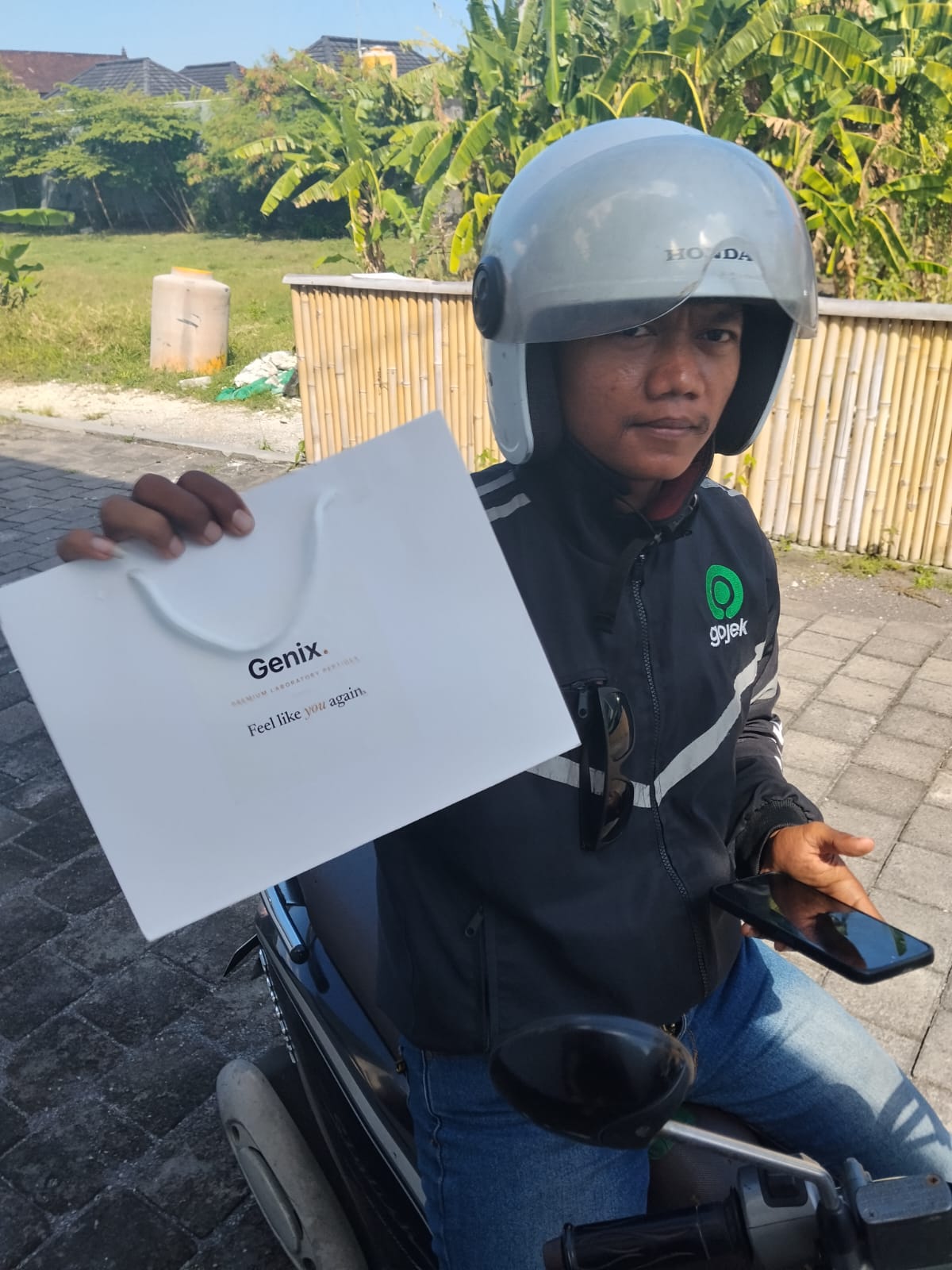
Our cold room in Bali, kept at 2–8°C, door always shut tight.
We talk about lab handling and storage, never a dosing or injection plan. Reta is a research compound.
Is Reta actually for you? Read this first.
The “tried everything” crowd
Every diet, app and reset. You're not lazy, you just never had the right tool.
The priced-out
You did the math on $1,000-a-month shots and said no. You want the real thing without the gatekeeping.
The food-noise fighters
The chatter in your head never stops. More than the scale, you just want quiet.
The careful ones
You won't put a mystery vial in your body. You want proof first. So do we.
Reta is not for everyone. Here's who should skip it.
Magic-pill hunters
Want results with zero effort and zero patience? This isn't it. Reta helps, it doesn't do it all for you.
Cheapest-vial shoppers
If a $30 “30 mg” vial sounds like a steal, you're the one who gets burned. We're not the cheapest. We're the proven one.
Three doors. Only one shows you proof before you pay.
| What matters | Genix Reta | Random gray-market vial | Brand-name shots |
|---|---|---|---|
| Free shipping | |||
| Money-back guarantee | |||
| See a lab report for YOUR batch before you pay | |||
| Tested for what it is, not just how pure | |||
| Shipped cold, 2–8°C, with tracking | |||
| Costs under $1,000 a month |
✓ yes · ≈ sometimes · ✕ no
Based on how each option is usually sold, not a promise about any result. Brand-name shots are prescription products, shown for comparison only. Reta is a research compound, sold for laboratory use only.
If your hunger doesn't drop and the scale won't budge, text us. We send your money back.
You've been let down before, by diets that quit on you and shortcuts that did nothing, so we'll carry the risk, not you. Run your first full month the way we map it out for you. If the hunger is still loud and the scale hasn't moved, you don't argue and you don't jump through hoops. You text us, and we send your money back. We can only make that promise because we see what happens once the food noise actually goes quiet.
Money-back guarantee
Cravings didn't quiet down on your first month? Message us, we refund it. Simple.
Free shipping
Cold-packed and tracked to your door at no extra cost. Always.
Lab report first
You see the report for your exact batch before you pay. If a batch fails our test, it never ships.
No forms and no fine print: message us within 30 days and we refund your first vial. Logging your shots in the free Genix tracking app just makes it instant, your log is your receipt, but you are covered either way.
Made here in Indonesia,
cold-packed to your door.
Our main office is in Bekasi, just outside Jakarta. Orders ship cold-packed from our Bali hub to Southeast Asia, Europe and Australia, and stay cold the whole way.
Questions along the way? Message us on WhatsApp anytime, before, during and after delivery. In Bali, you can also pay cash on delivery, so you pay only when it arrives.



Lantai 7, Jl. Bulevar Ahmad Yani No. Kav K.01, Harapan Mulya, Medan Satria, Kota Bekasi, Jawa Barat 17142, Indonesia
Jl. Sari Dana I, Jl. Cargo Kenanga No.20, Ubung Kaja, Denpasar Utara, Bali 80116
- Cash on delivery available in Bali
- Secure, gated storage units
- Right on the main cargo route out of Denpasar
- Flexible space, so orders move out fast








In Bali? It can be in your hands today. No surprises, no hidden steps.
Our team and head office are in Bekasi, and you're welcome to walk in and see us. We ship cold-packed from Bekasi and Bali every day, with same-day delivery across Bali.
- Our team · Bekasi HQ
- Cold storage · 2–8°C
- Your vials + lab report
- Out for delivery · Bali
Start low. Go slow. Stay comfortable.
The provider-guided protocol that eases your body in instead of shocking it. Tobias tested every batch on himself first.
Most people get everything they need at 4mg. If hunger is not fully controlled, your provider can step you up to 6 or even 8mg. Completely optional.
You start at just 1 mg a week so your body eases in, with plenty of water. Weeks 1 to 4 add up to exactly 5 mg, so a single 5 mg vial covers your whole first month as a gentle trial.
Gradual dosing and constant provider supervision minimize risks. We are with you every step.
Genix Labs.
How much Reta is working in you, week by week
Modeled from your titration schedule above. Your level builds smoothly over the first weeks, holds steady at your working dose, then tapers and clears once you finish. Illustrative research reference, not medical advice.
Illustrative research-reference protocol, not medical advice. Reta is a research compound, sold for laboratory use only.
Want the weight off faster?
Everyone wants the same two things: lose more, and lose it sooner. Reta hands you both speeds, and you're protected whichever you pick.
In Eli Lilly's trials, 24.2% was just the average. About 1 in 4 people on the full dose lost 30% or more of their body weight, and the scale still had not stopped moving when the study ended. Online, some people report dropping faster and further than they ever did on older shots, sailing past the stall point that used to box them in. These are individual results and personal reports, not promises, and everyone's body responds differently, but they show how high the ceiling can go.
Eli Lilly's Phase 2 trial (NEJM, 48 weeks) measured a 24.2% average drop in body weight on the full protocol. Treat that as your conservative floor, the typical clinically measured result, not the best case, the number the data points to even if you skip the perfect diet and the gym. The floor alone already changes a life.
For someone starting around 100 kg, the trial floor alone is about 24 kg. The people who push hardest, with the full protocol dialed in, report even more.
Source: Jastreboff et al., New England Journal of Medicine, 2023, plus Eli Lilly's Phase 3 TRIUMPH readouts.
Research-use-only data on an investigational compound. These are group averages from a clinical trial, not a personal guarantee. Individual results vary. This is not medical advice.
The tracking app that pays you back. Yours free, for life.
Other apps charge you every year just to log your shots. Ours is free, and it pays you back the longer you stay.
Welcome back
- MMedisafeMedication tracker$39.99/yr
- SShotsyGLP-1 injection trackerup to $59.99/yr
- RRegimenPeptide injection tracker$39.99/yr
Log your check-in every day and your loyalty discount grows on its own. This is how you earn a bigger discount, or even a free order.
- Your first month: 1% off for every day you log, up to 31% off
- 90-day streak: 50% off your next order
- 180-day streak: 75% off your next order
- 365-day streak: A free order, plus VIP status
If all it did was grow your loyalty discount 1% for every single day you log, all the way to a free order, that alone would be worth it.
Screens shown are the real Genix app at getgenixlabs.com/app. Discounts are loyalty rewards for logging, not a health claim.
Auto-Inject Pen
No fiddly setup. You dial the exact dose, the auto-inject pen clicks once per unit so you can feel it is right, rest it on your skin, and it injects itself in seconds. The micro-needle is so fine most people barely feel it. Discreet, reusable for months, easy to travel with.
If all it did was turn a nerve-wracking first injection into a calm 30-second routine, that alone would make this an easy yes.
- ·Faster results on Reta
- ·Pairing other peptides
- ·Smart shopping + recipes
- ·One-tap delivery via Gojek
The Optimize Your Cycle Guide
Completely optional, and it is the fast lane. It walks you through getting more out of Reta, how it pairs with other peptides, smart grocery shopping, simple recipes, and easy optional activities, all orderable to your door in a few taps through Gojek. Read it and go faster. Ignore it and you still get the average trial result. Your call. The money you save eating less and shopping smarter is more than the guide is even worth, and you pay nothing for it.
If all it did was save you more on smarter grocery shopping than it costs, and it costs you nothing, that alone would make it an easy yes.
24/7 Support, a real human on WhatsApp
A real person, any hour, any day. Got a question at 11pm before your shot? Message us and someone real answers. This is the kind of one-on-one guidance other programs charge a concierge coaching fee for.
If all it did was answer the one late-night question that would have otherwise made you quit, that alone would be worth more than you are paying.
The Genix Insiders Community
You will not do this alone. Get accountability from people on the same path, plus first dibs on new drops before anyone else.
If all it did was show you ten people past 40 already losing the weight the same way, so you finally believe it is possible for you, that alone would be worth it.
The food noise goes quiet, or you don't pay.
Reta is built to turn your hunger down. If yours doesn't drop, you pay nothing. Simple as that.
- 1Try Reta for your first month.
- 2If your hunger does not go down, just message us.
- 3We give your money back. Simple.
You also see your vial's lab report before you pay one cent, so you know it is real first.
This is a satisfaction promise, not a health claim. No forms and no conditions: message us within 30 days and we make it right.
Needle-shy? Remember: it is a click-pen with your first dose already set, not a syringe.See how easy it is ↑
Add up everything you're getting before you see the price
We put a real, checkable dollar value on everything in the box and around it. Add it all up first. Then see what you actually pay.
#1 Genix Tracking App
$40/yrFree for life#2 Auto-Inject Pen
$40Free#3 The Optimize Your Cycle Guide
$39Free#4 24/7 Support, a real human on WhatsApp
$99Free#5 The Genix Insiders Community
$49Free
You do not pay $267. It all comes free with your vial. Why is the price so low? You buy straight from us. There is no clinic in the middle adding a big markup.
And you are protected twice: you see your batch's third-party lab report before you pay a cent, and the 30-day money-back guarantee covers your first month, no conditions. The only way to lose is to keep paying the all-day food-noise tax you are paying right now.
Order before 9 PM and your vial goes out the same day, cold-packed and tracked; in Bali it is at your door in about 2 hours. Order after 9 PM and it ships first thing the next morning. We confirm the current promotional price before payment.
Start your first month.
No cart games, no surprises. You see the lab report first, then decide, then pay, on WhatsApp.
We are not asking you to decide yes or no right now. Open a free chat, look at your batch's lab report with your own eyes, then decide. No card, no email. Deal?
- Brand-name shots run $1,000+ a month. That is $12,000 to $13,000 a year.
- Weight-loss clinics charge about $1,000 just to get started.
- Genix Reta: not even a third of one month of those shots. Less than what many people spend on takeout in a week.
When you see the price, your first reaction is going to be: that's it?
In Bali? Order by 9 PM, at your door in about 2 hours. Pay cash on delivery.
133 orders shippedReta
Research peptide · 5 mg vial + bonuses
$62 USD per vial · $109
Just $2 a day, less than your morning coffee.
- Quiets the food noise that wrecks every diet
- Burns stubborn fat without crash dieting or the gym
- You see the batch lab report before you pay a cent
- Auto-inject pen
- 24/7 support & guidance
- Tracking app, free for life
In stock. Order before 9 PM and it ships today, cold-packed and tracked. In Bali it is at your door in about 2 hours.
30-day money-back guarantee: still hungry after your first month? Message us and we refund it.
One-time payment, no subscription, never auto-billed. The price you see is the price you pay.
Lot 134435 tested 99.96% pure by MZ Biolabs. You see the report for your exact batch before you pay a cent.
Your projection is modeled on Eli Lilly's Phase 3 Reta trials, where participants lost up to 24.2% of their body weight.
The price you see is the price you pay: no codes, nothing added at checkout. Brand-name shots run $1,000+ a month.
Picture twelve months from today if nothing changes.
Same noise at 3pm. Same raid on the kitchen. Same quiet shame at the fridge in the dark, and another year gone. That is the real cost of doing nothing. Not money. The year.
Or you send one free message, look at the lab report for your own batch with your own eyes, and let someone finally show you the dial.
These statements have not been evaluated by any food or drug authority. Reta, Tesamorelin and MOTS-C are sold strictly for laboratory research and scientific evaluation, not for human consumption or medical use. The money-back guarantee is a satisfaction/refund offer, not a health claim. Testimonials are individual experiences and may not reflect a typical result; results vary. Information on this page is educational only and is not medical advice. Brand-name medications are referenced for comparison and education only and are not sold by Genix Labs. © 2026 Genix Labs.
For laboratory use only · hello@getgenixlabs.com
Read what thousands are quietly saying online.
We didn't write a word of these. They're raw, unedited, and happening in comment sections right now.
You are going to think these are bots. Fine. Open YouTube, search Reta, and read the comments under any video yourself. Same words, everywhere, from people nobody paid.
Unedited public comments, shown as they were posted online. Go have a look online at literally any Reta video, you will see the same type of comments everywhere!